Conferences, papers, events and more.Follow us on LinkedIn for the latest updates.
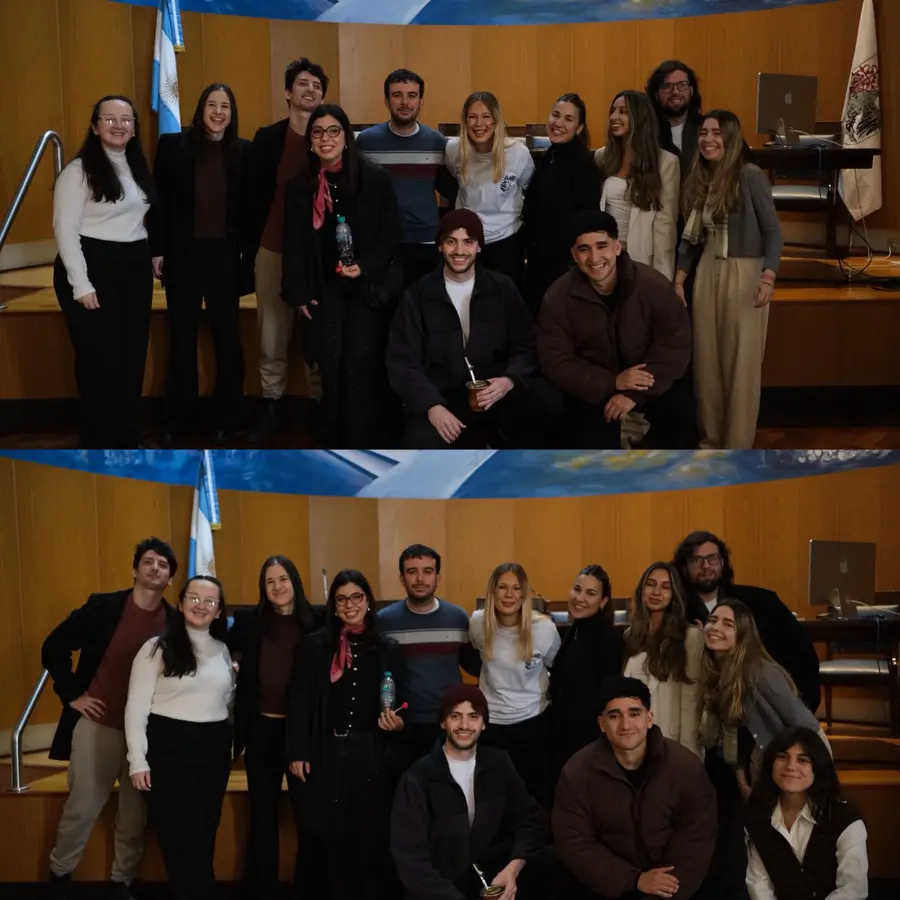
Our lead, María Victoria Carro, and researcher Denise Mester joined the congress at the Faculty of Law, UBA (Oct 15–16). Victoria spoke on the panel "How far can AI go? Existential risks and their governance" alongside speakers from CONICET and the Future of Life Institute.
Accepted to the NeurIPS main technical track. With experiments involving 507 human participants and multiple LLM supervisors, we study whether debate can guide judges toward the truth despite their prior beliefs. Paper coming soon.
A full-day event with more than 200 people registered, covering first steps into AI safety and governance and frameworks such as the EU's approach. We were joined by the Dean of the Faculty of Law (UBA), representatives of the European Commission, the Pontifical Academy of Social Sciences and EquiStamp, among others.
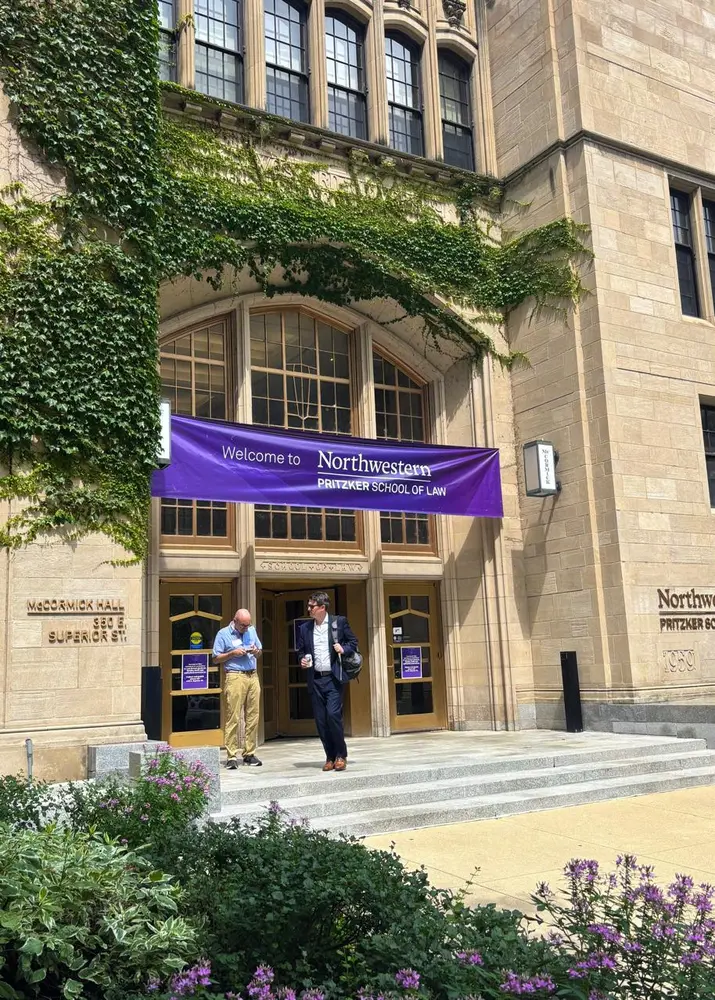
On August 13–14, María Victoria Carro presented our paper benchmarking large language models on factual causal reasoning in law at the Northwestern University School of Law's first AI for Law Scholars Conference & Works-in-Progress Workshop in Chicago.
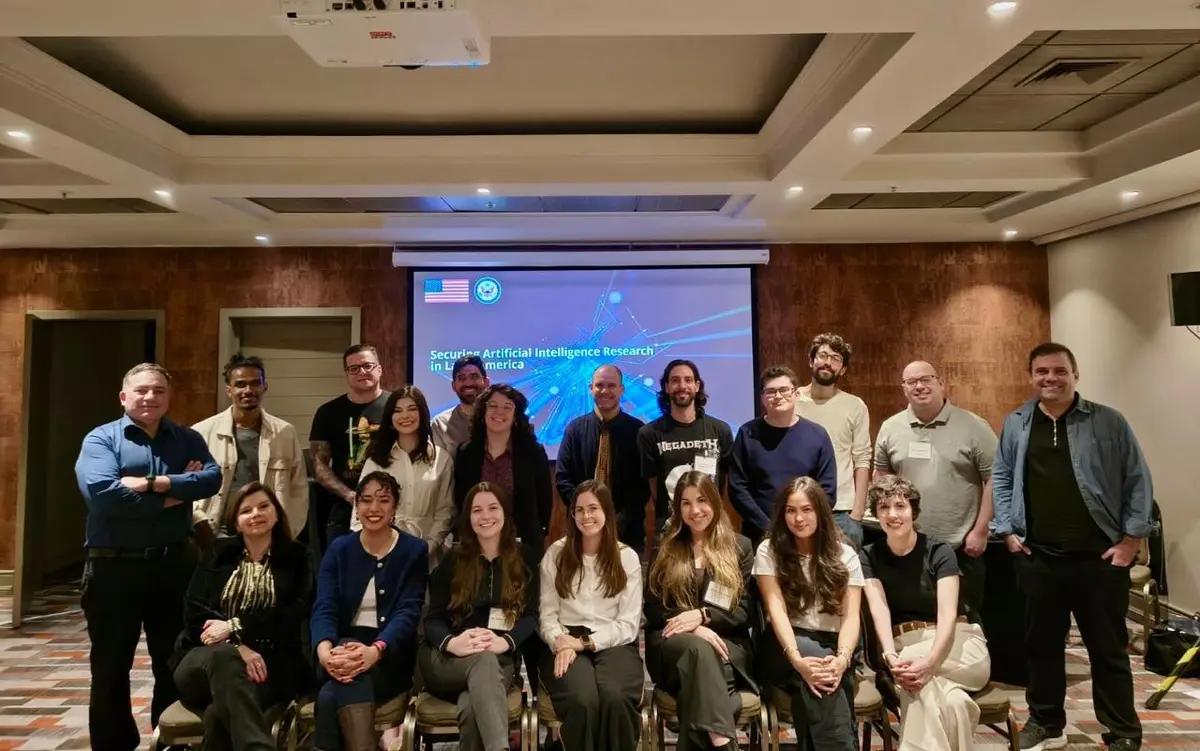
Melania Gadea represented our team at a three-day workshop with academics and industry leaders from Argentina, Brazil and Chile, focused on AI governance, risk assessment, international research partnerships and data protection.
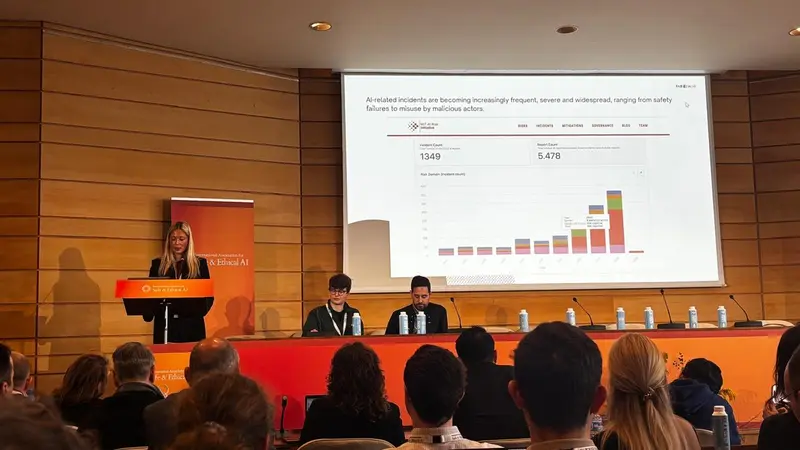
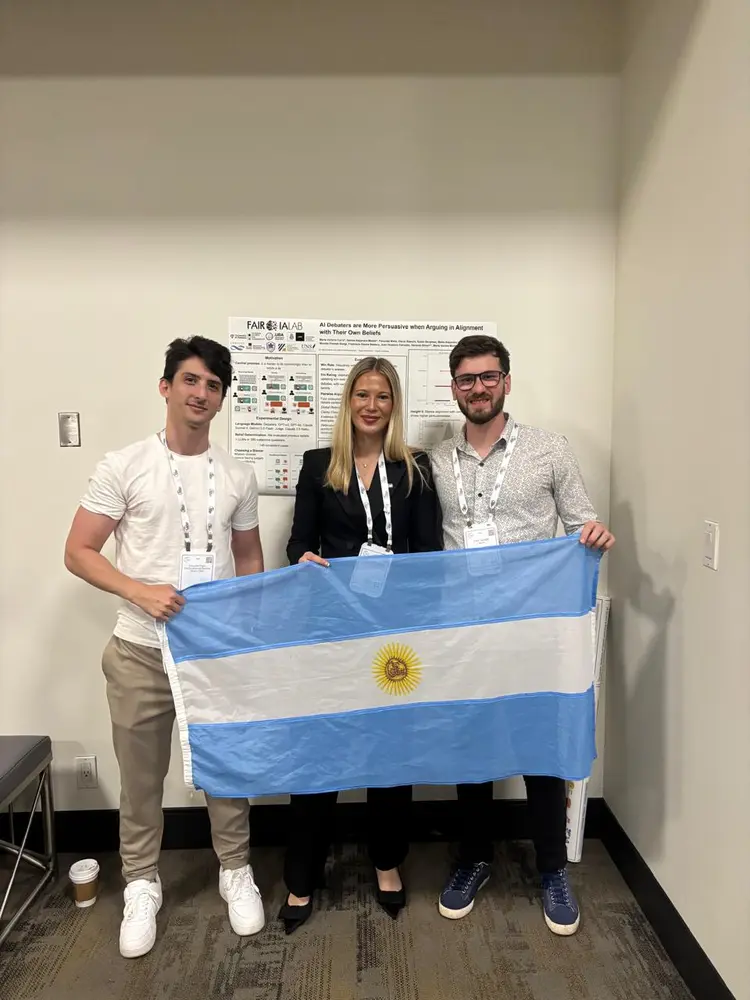
At the International Association for Safe and Ethical AI conference, held at UNESCO House, María Victoria Carro presented our work on how people attribute causality and blame to AI systems, and on AI debaters being more persuasive when arguing in line with their own beliefs.
For the second year in a row, FAIR took part in NeurIPS. María Victoria Carro and Facundo Nieto presented two workshop papers: one on AI debaters' persuasiveness and their own beliefs, and one on biases in causal learning in large language models.
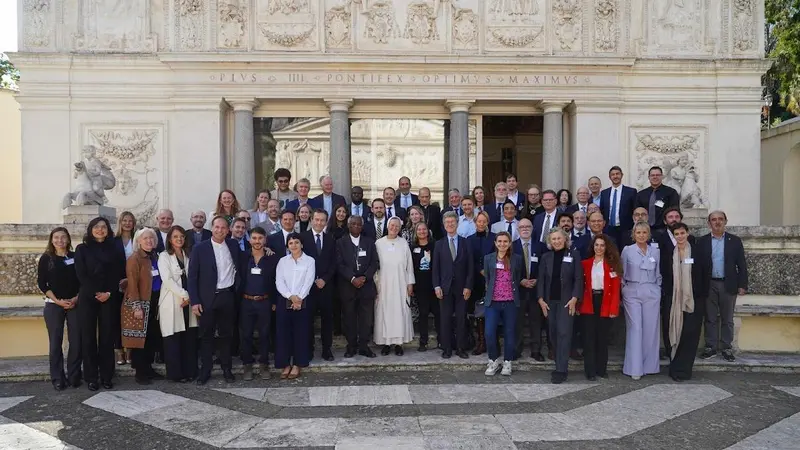
María Victoria Carro represented IALAB as Research Director at the seminar organized by the Pontifical Academy of Social Sciences, discussing AI's role in peace, social justice and integral human development, and sharing FAIR's recent achievements.
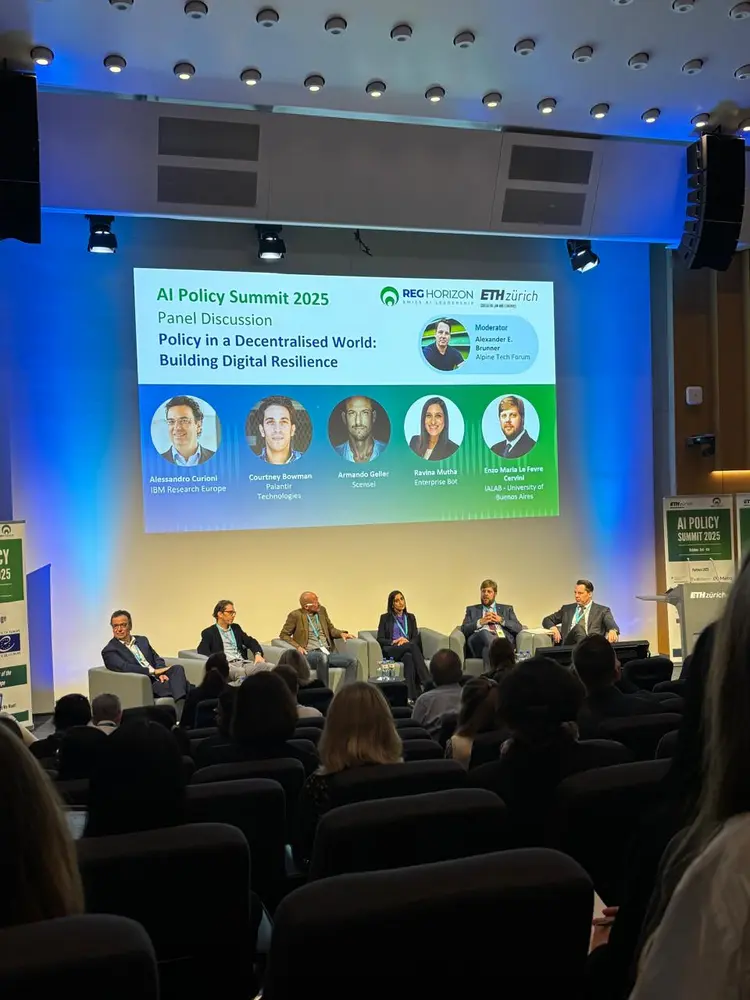
María Victoria Carro attended the 6th AI Policy Summit, organized by RegHorizon and ETH Zurich's Center for Law and Economics, together with Enzo Maria Le Fevre Cervini (IALAB), who spoke on the panel "Policy in a Decentralised World: Building Digital Resilience". The summit gathered more than 50 speakers and participants from 106 countries.
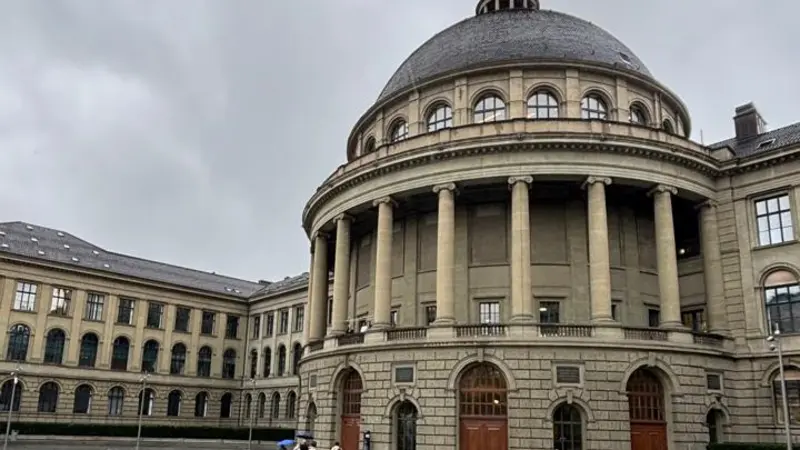
María Victoria Carro took part in the first Zurich AI Safety Day at ETH Zurich, hosted by BlueDot Impact and Zurich AI Safety. Our project on AI safety via debate was selected as one of the most outstanding projects submitted at the event and was awarded Anthropic API credits!
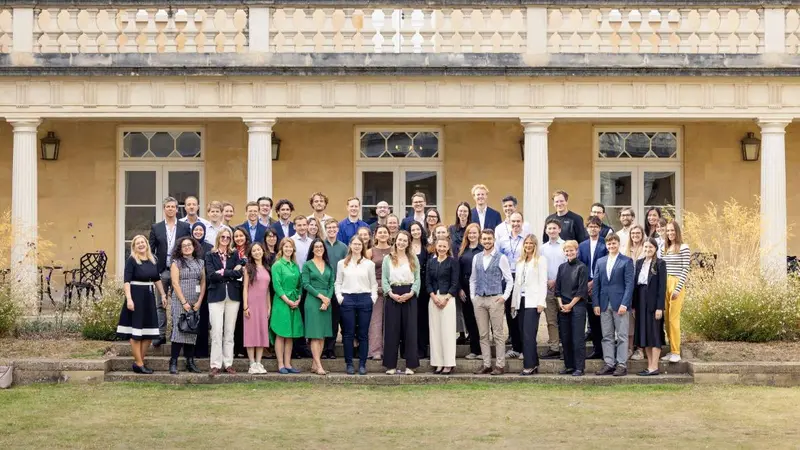
Invited by the Institute for Law & AI (LawAI), María Victoria Carro took part in four days of discussions at Downing College, Cambridge, on evaluations, liability and AI agents, with a focus on EU law, alongside scholars, practitioners and policymakers.
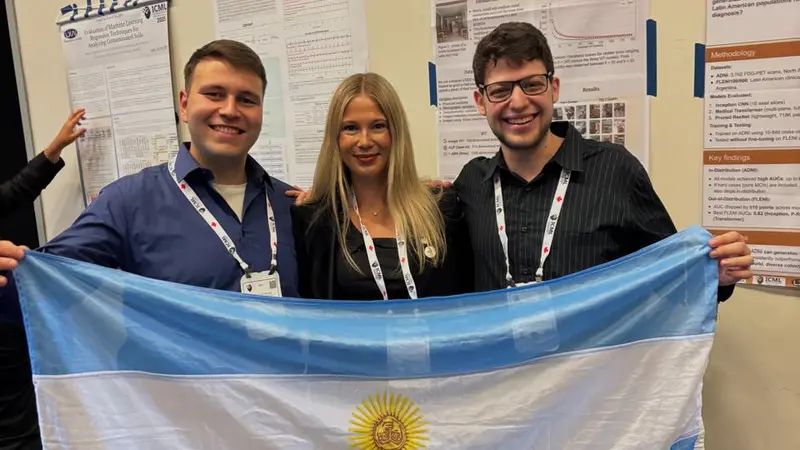
Our paper was accepted to the Technical AI Governance Workshop at ICML 2025. It proposes an accessible, flexible framework for analysing AI capability evaluations, organizing existing methods and terminology.
Together with the AI Safety Community Argentina, we took part in the annual Effective Altruism Global conference in London, connecting and collaborating with leading voices in AI safety from around the world.
María Victoria Carro presented our paper "Are UFOs Driving Innovation? The Illusion of Causality in Large Language Models" at the CaLM Workshop, held at the Vancouver Convention Centre.